
Julia Smolnaya
Julia Smolnaya (Юлия Смольная) was born on June 9, 1983 (age 40) in Russia. She is a psychologist, hypnotherapist, NLP master, expert in…


Saint Petersburg, Five Minutes at a Time
Юлия Смольная was not supposed to end up here. She was supposed to be a ballerina. The daughter of a navy officer and a nurse, she grew up in Saint Petersburg — a city that takes dance seriously in ways that other cities simply do not — and attended the city's ballet school with the kind of early dedication that rewrites a childhood. She didn't become a ballerina. She became something harder to categorise and, for this community, considerably more interesting.
Julia Smolnaya — Юлия Смольная — holds degrees from СПбГУ in languages and international arts business, a clinical psychology qualification from МПСУ, and a specialism in dance-movement therapy from ИМАТОН. That is an unusual combination of credentials, and it produces an unusual kind of online presence. At 513,000 Instagram followers and 2,619 posts, @juliasmolnaya is not small. But it is not the number that matters. It is what those posts actually show.
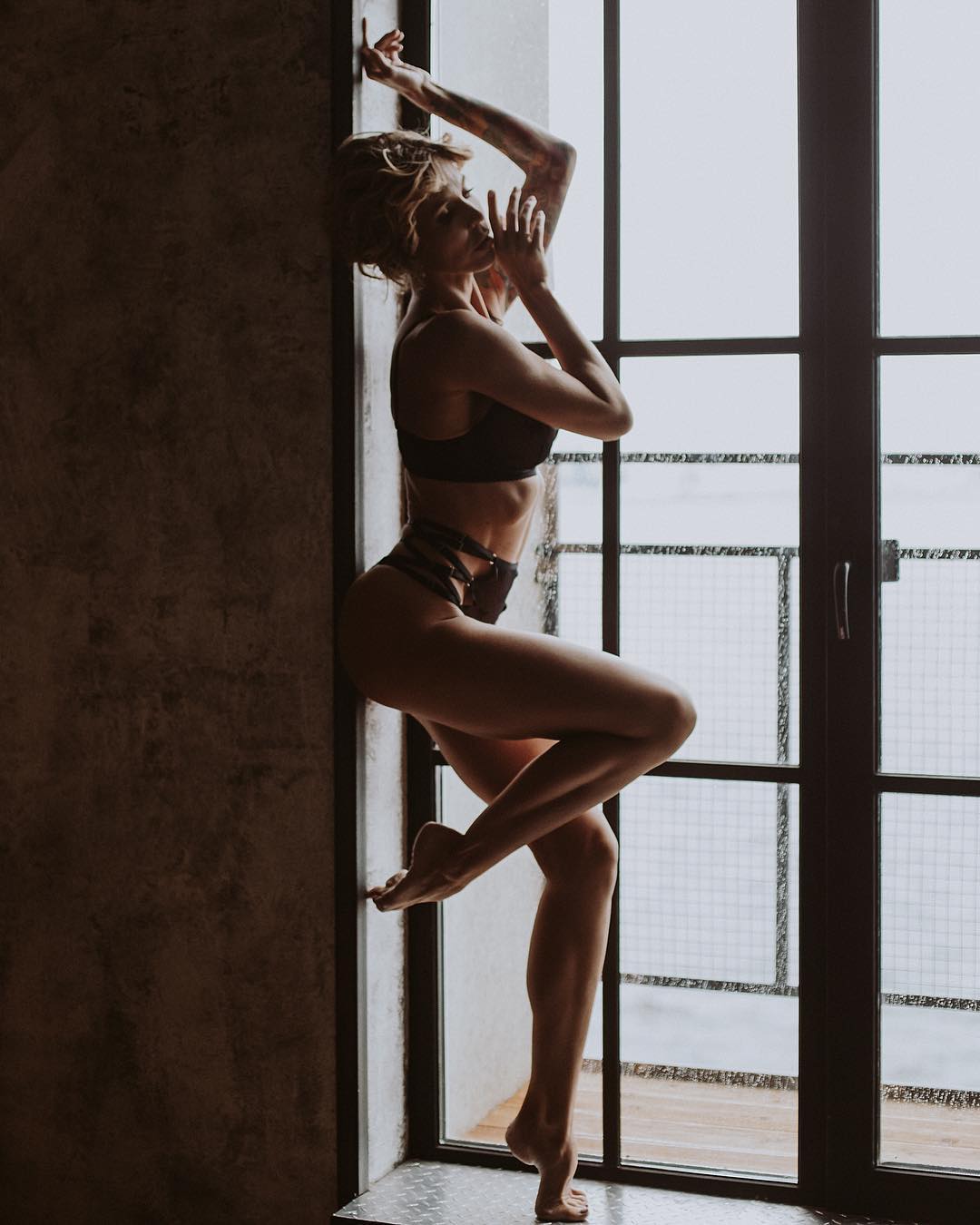
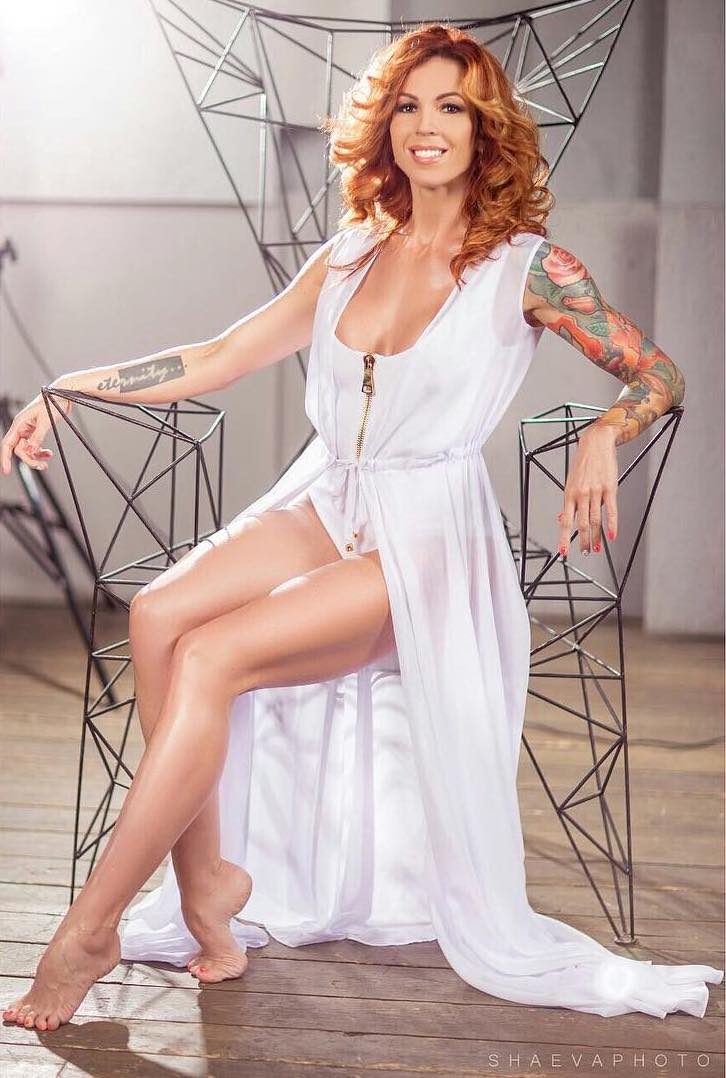
Юлия Смольная ножки
Пятиминутки
Before the psychology, before the dance therapy, before the pivot that redefined her public identity, Julia Smolnaya was the fitness blogger behind the Пятиминутки — five-minute workout sequences that reached millions of Russian-speaking women across the internet and helped her build an audience that, by any measure, was substantial. She co-ran Бешеная Сушка — a wellness and body transformation programme — with her husband Vasily Smolny, a programme now in its twenty-first season. She launched her own women's club. She taught the splits to thirty thousand people, she says, without causing pain.
None of this is incidental context. It tells you exactly what kind of body Julia Smolnaya has been maintaining and documenting for the better part of two decades — a body trained in classical ballet from childhood, then in sports aerobics, then in the full range of fitness and flexibility disciplines, and finally in the somatic awareness that dance-movement therapy demands. The feet in that context are not decorative. They are occupational.
The Officer's Daughter, Barefoot
The ballet school background is where everything begins, physically. Russian ballet training, particularly in Saint Petersburg — the city that produced the Mariinsky, the Vaganova Academy, the entire vocabulary of classical technique as the West eventually borrowed it — is among the most rigorous foot-education that exists. It starts with the arch. It depends on the arch. A child who enters that system with a natural high arch leaves it with something refined, loaded, structurally deepened by years of pointed work.
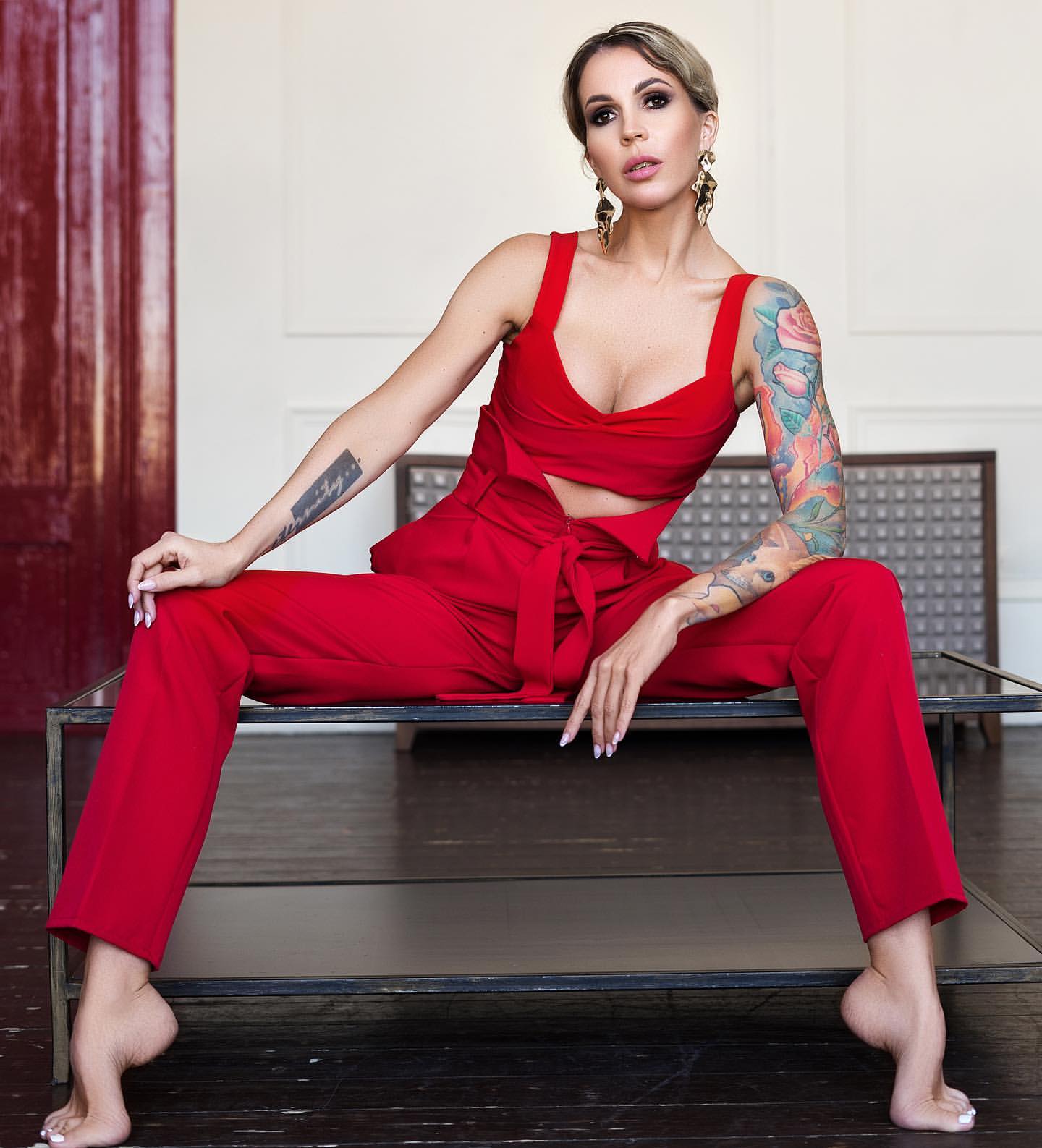
Julia Smolnaya's high arched feet carry that history visibly. The arch does not announce itself with the dramatic suddenness you sometimes see on a foot that has been shaped primarily by heels or by extreme flexibility training. It announces itself quietly, the way something structural always does — by simply being there, consistently, across every pose and every surface. In flat-footed standing balance work, the inner midfoot lifts cleanly. In seated forward folds and pointed extensions, the instep draws a long, unhurried curve from the back of the ankle forward to the toes. It is the curve of something that has been worked correctly for a long time.
The forefoot is proportionately wide for how dramatically the arch narrows the waist of the foot. That contrast — the spread of the toes, the tight inward pull through the midfoot, the heel anchoring it all below — is what the HAF community is looking for when it scrolls through flexibility and dance-therapy content. It reads clearly in Julia Smolnaya's movement work because the poses she teaches, and the content she produces, consistently place the foot in the kind of mechanical stress that reveals its architecture. A navasana. A standing split. A barre sequence on the floor. Every one of these is a documentation session.
In flexion — foot fully pointed, the whole leg pulled into extension — the instep rises into a curve that has genuine length to it. It is not a short, abrupt peak. It is a sustained elevation that runs from heel to the ball of the foot without interruption, which is the specific quality that distinguishes a genuinely high arch from one that merely reads as dramatic at a favourable angle. Julia Smolnaya's arch is present from every angle, under every load, in every pose.
The toes are straight, well-graduated, and — in her content — consistently maintained. The skin reads as pale and even, which is consistent with someone from Saint Petersburg, and with someone who has been photographing her feet professionally for the better part of twenty years. One observation: there is nothing about the upkeep that draws attention to itself. The foot is the subject. Everything else is background.
In open footwear, where her content occasionally lands, the gap between strap and arch is the kind that makes a sandal look like it is touching two separate surfaces with air between them. The mid-section of the foot does not participate in contact. It rises, holds its position, and lets the shoe deal with the heel and the forefoot on its own.
From the Barre to the Consulting Room
The shift from fitness blogger to dance-movement therapist is not as dramatic as it might appear from the outside. Dance-movement therapy — танцевально-двигательная терапия — is a clinical discipline. It uses the body as the primary instrument of psychological work. The practitioner's own physical awareness is not incidental; it is the foundation of the method. Julia Smolnaya runs Telegram channels — СМОЛЬНАЯ для своих as a personal diary, ШПАГАТ с Юлей Смольной as an expert channel on flexibility and mobility — and conducts individual sessions and group trainings as a qualified clinical psychologist.
The audience of 513,000 did not follow her because of her credentials. They followed her because she moves well, has been moving well for a very long time, and does not perform it. There is a quality in her content — visible in the stillness of the upper body when the lower half is working, in the weight transfers, in the way the foot leaves and finds the floor — that comes from a specific kind of body literacy. Балетная школа Санкт-Петербурга produces that. Two decades of consistent practice sustains it.
For this community, Julia Smolnaya is the kind of subject that rewards sustained attention. She is not here for the niche. The niche found her anyway.
niche by definition.
Behind this archive is a private community of collectors
and enthusiasts who know that.
If high arched feet brought you here —