
Inna Abolonina
Inna Abolonina from Yekaterinburg began to engage in yoga in 2001. This former high arched feet lawyer quit her job to become a yoga teacher.…

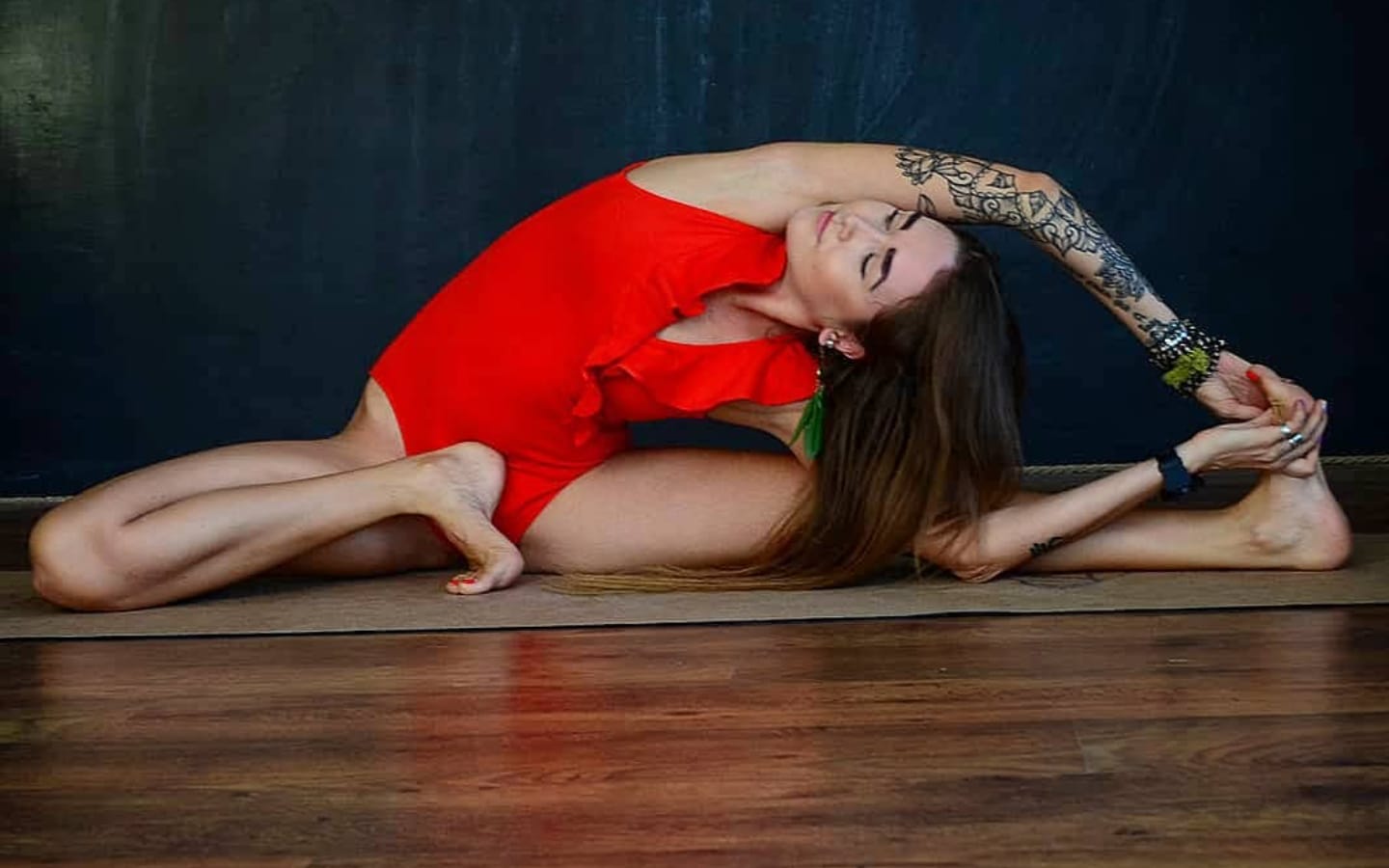
Inna Abolonina left a lucrative legal career to follow yoga — and if that sounds like a familiar story, the execution is anything but. Yoga first entered her life at fifteen, through books and philosophy, long before it became a fitness industry product. At seventeen, alongside enrolling in law school, she picked up Thai boxing — three years of it — before returning to the practice that had always had the stronger pull. The law was never the destination. It was just what happened between then and now.
Инна Аболонина is Russian, based out of Ekaterinburg, and she has built something most yoga instructors don't manage: a genuinely independent practice with its own intellectual backbone. Sixteen years of personal practice and thirteen years of teaching are behind her at this point. She holds a Yoga Alliance USA RYS-300 certification, and she trained at the Prana yoga centre and has authored her own courses — "Strong Flexibility," "Stretch for Results," "Complete Transformation," "Your Own Instructor". She runs regular classes, intensives, and seminars in both Russia and India.
Yoga-High-Arched-Feet
No Identical Programmes, No Fixed Sequences
What separates Abolonina from the content-mill instructors is methodology. She operates on the premise that every person is individual, and that the same programme cannot bring the same benefit to two different practitioners. In her teaching, she does not use fixed sequences, combinations, or movements. That is a principled position, not a marketing line — it comes from someone who spent years learning what doesn't work before building something that does.
Her own formation ran through Iyengar, Ashtanga Vinyasa, and dozens of seminars from visiting teachers. She began teaching after approximately three years of intensive practice and self-directed learning from masters, books, and her own body. The legal mind is still in there — the rigour, the case-by-case analysis, the resistance to one-size conclusions. It just operates on a different subject now.
At the point she first encountered yoga seriously, she had a permanent PE exemption at school, scoliosis, seven years of music school, and the academic record of a straight-A student. The physical starting point was genuinely unpromising. What she built from it — and the fact that she built it from there, not despite it — is what makes her worth paying attention to.
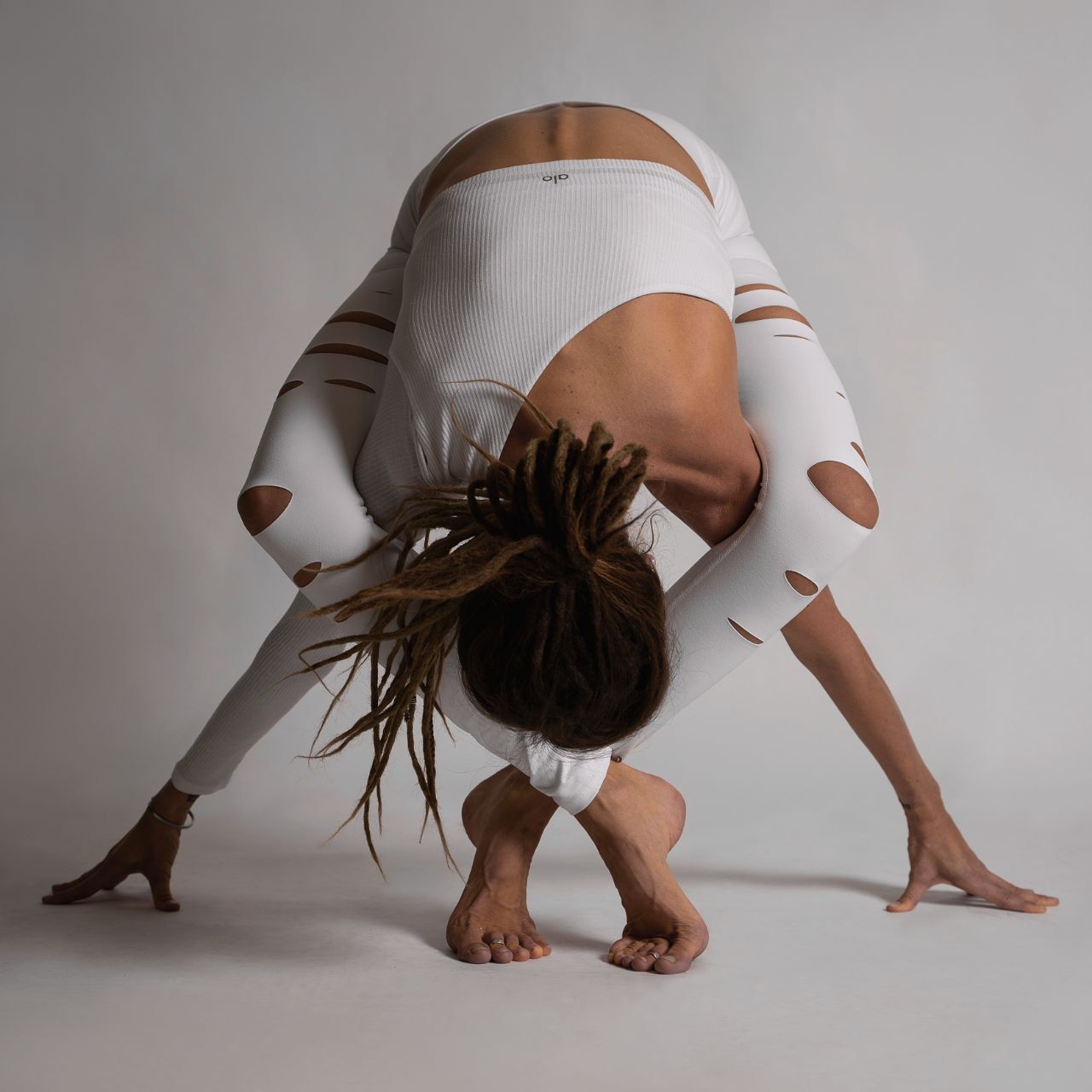
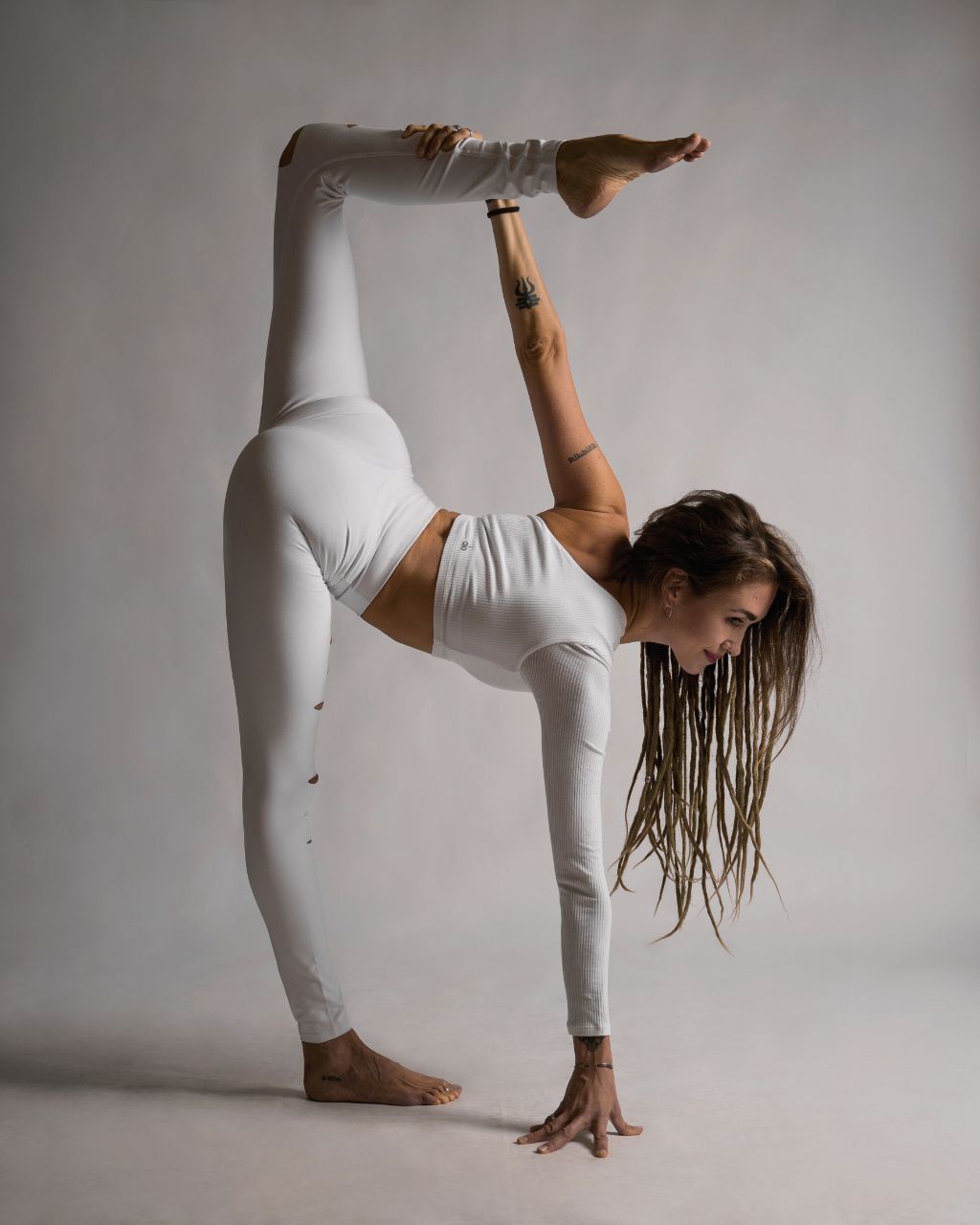
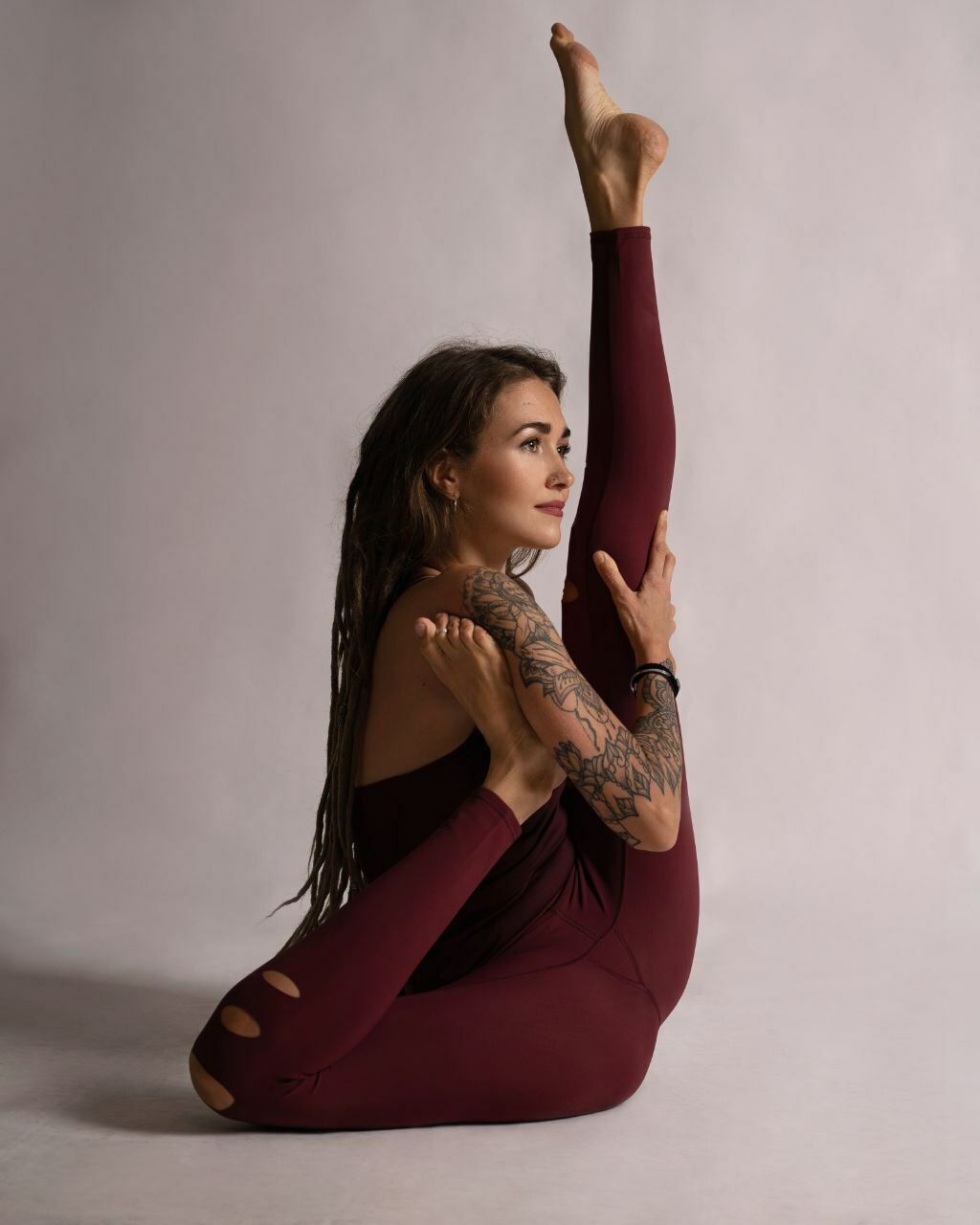
Yoga-High-Arched-Feet
Pulled Inward from Every Edge
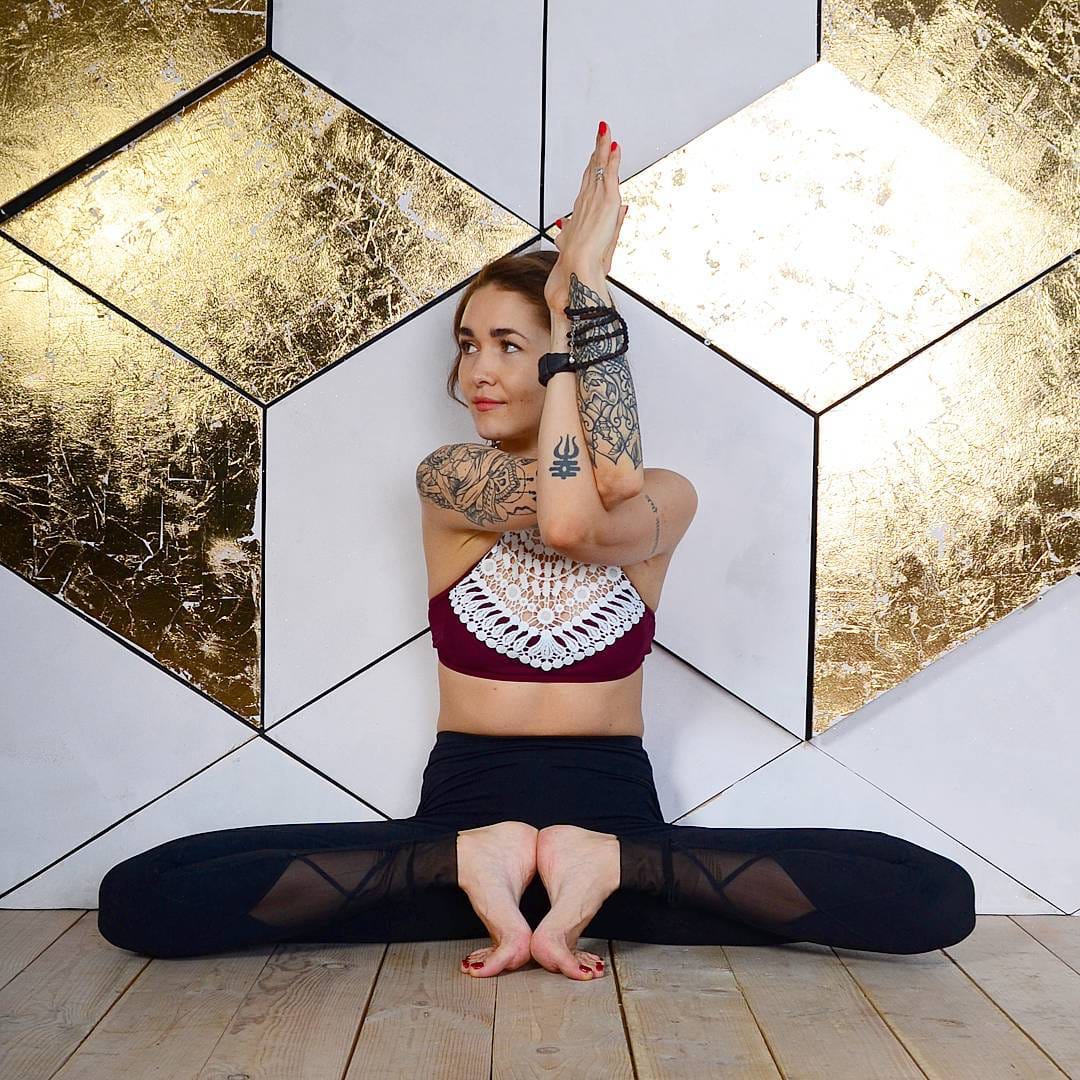
The first thing you notice about Inna Abolonina's feet in her practice images is not the arch itself — it's the space. The gap between the underside of her foot and any surface it rests near is almost architectural in quality. At rest, the midfoot pulls so cleanly away from the ground that the arch reads less like a biological feature and more like a deliberate negative — a carved-out hollow that defines the structure by what it removes.
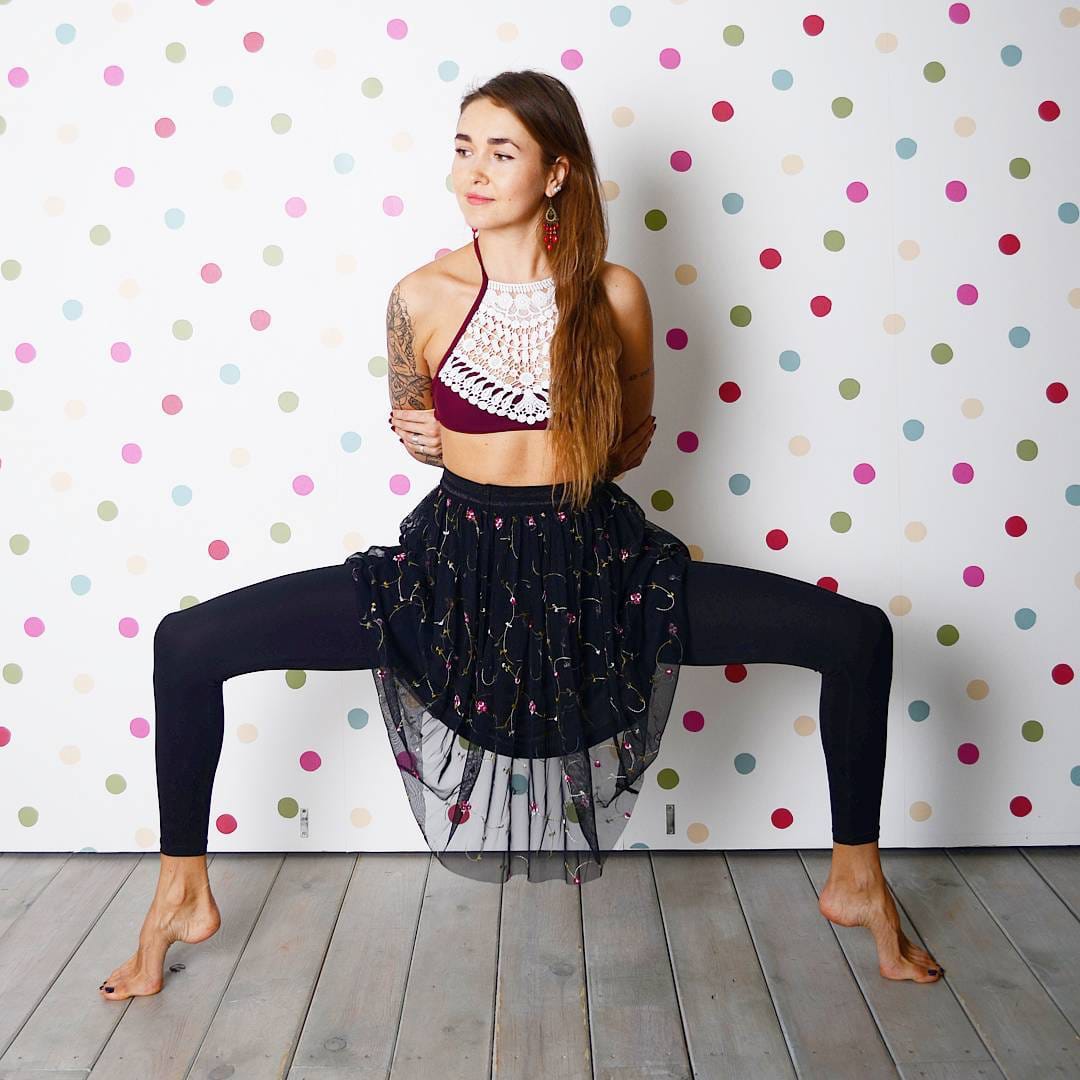
When she moves into standing poses, that quality sharpens. The forefoot is broad and grips well, making the sudden inward pull of the arch look even more severe by contrast. The foot narrows dramatically at the midpoint — not gradually, but almost as a statement. Then the heel sets back down wide, completing a silhouette that is genuinely sculptural: widest at the toes, widest again at the heel, with that pronounced inward curve between them that characterises the cavus type at its most developed.
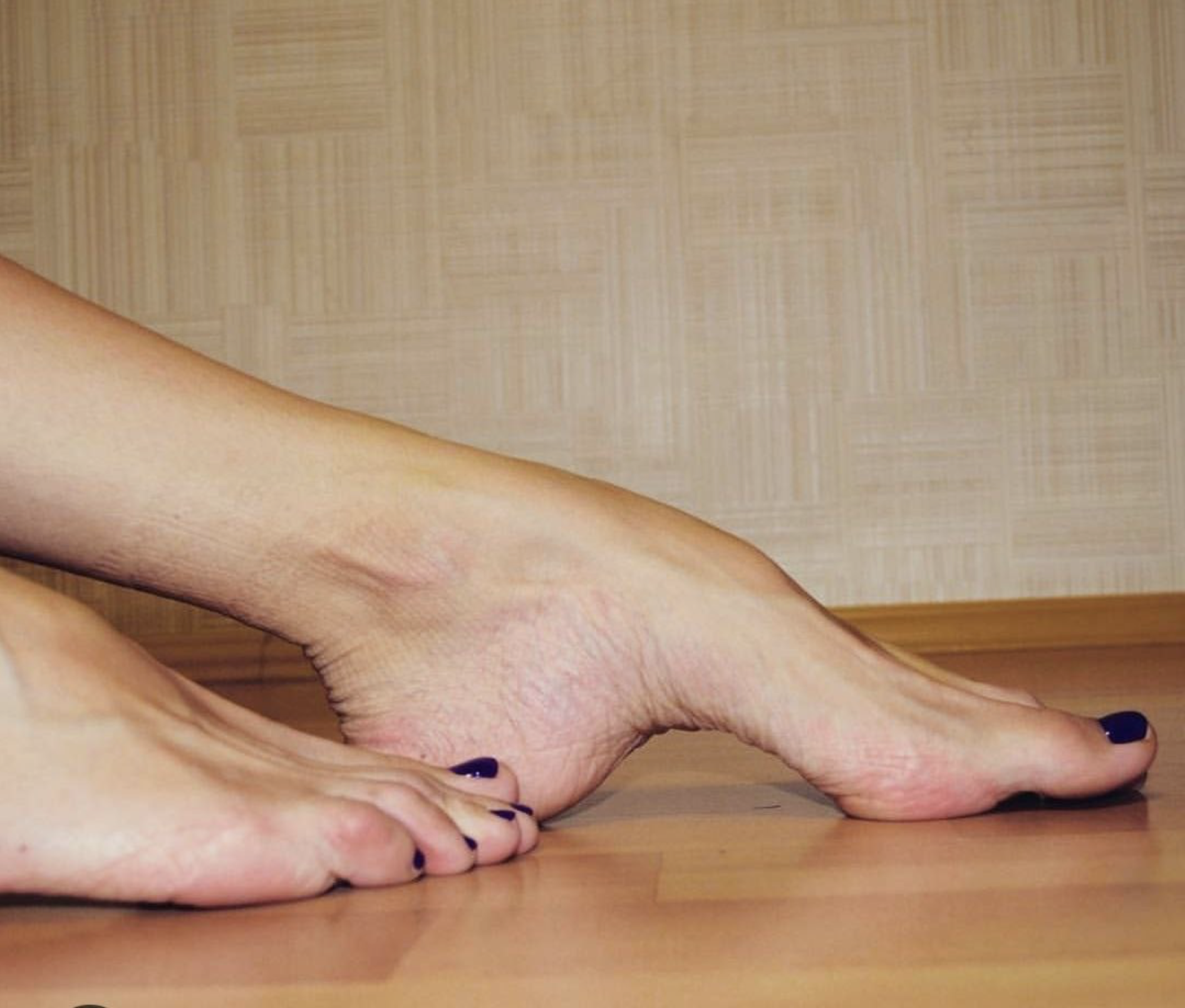
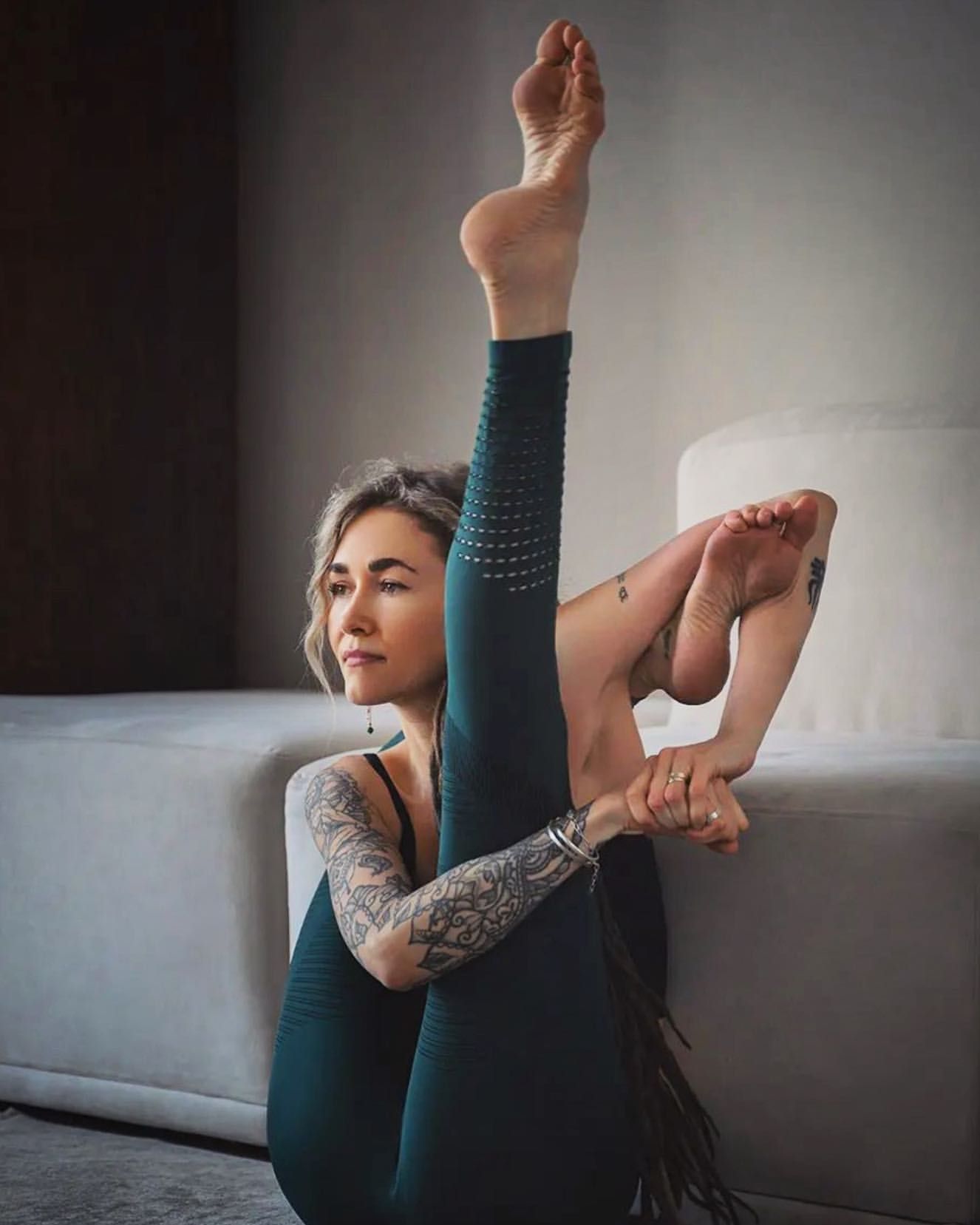
The instep is what holds the attention longest. In flexion — which Abolonina's practice produces constantly, across Virabhadrasana transitions, inversions, seated forward folds — the top of the foot rises in a long, clean arc from toe-knuckle to shin. It does not flatten. Even under load, that curve keeps its depth. The quality is almost tensile, like something under controlled strain that refuses to give. You see the tendons riding the surface, the foot communicating exactly what it is doing.
In barefoot standing, the gap beneath the arch is visible not just from the side but from behind — the midfoot lifts so fully that light passes through between foot and floor at a meaningful height. The toes are medium-length, reasonably even, with a silhouette that tapers without drama. The skin is well-maintained and consistently seen in practice contexts — smooth, clearly cared for, no signs of the neglect that comes when someone treats their feet as an afterthought.
What heels do to this structure is worth noting: they load an already high arch in a way that exaggerates the coiled quality visible at rest. In any elevated footwear the foot reads almost like a compressed spring — the heel raised, the arch pulled tighter, the instep climbing at an angle that looks improbable until you remember what the rest position already looks like. The foot was never going to lie flat. Everything in the structure points upward and inward, toward that hollow centre.
This is a foot that has been trained hard over sixteen years of serious practice and has arrived somewhere rare.
niche by definition.
Behind this archive is a private community of collectors
and enthusiasts who know that.
If high arched feet brought you here —